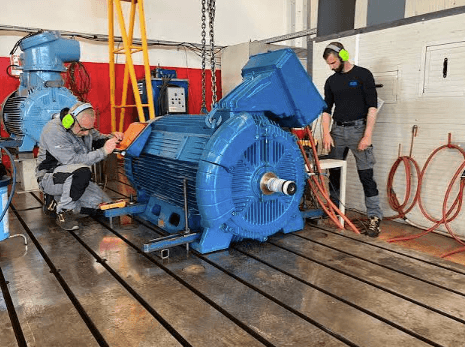
Industrial facilities operating large pumps, compressors, fans, and processing machinery need motor systems that can deliver dependable power under demanding conditions. Selecting the correct voltage class is an important part of electrical system design because it affects switchgear, cabling, protection, starting arrangements, and maintenance procedures.
A 3.3 kV motor may be considered for applications where the required power and facility distribution architecture make this voltage level appropriate. However, the selection must be based on verified electrical and mechanical requirements rather than voltage alone.
Understanding a 3.3 kV Motor
A motor rated at 3.3 kilovolts is designed to operate from a compatible electrical supply under specified conditions. It is used in some industrial installations that require substantial motor output and have an electrical distribution system designed for this voltage level.


Before procurement, engineers should verify the rated voltage, frequency, power, speed, current, and insulation requirements. They should also confirm compatibility with the site’s switchgear, cables, protection devices, and starting equipment.
The term “3.3 kV motor” identifies only one part of the specification. Two motors with the same voltage rating may differ in output, cooling, mounting arrangement, enclosure, efficiency, and duty capability.
Determining Power and Load Requirements
Correct motor sizing starts with understanding the driven equipment.
Rated output
The required mechanical output should be calculated using the load’s operating requirements, including any expected variation. Engineers should consider normal operating conditions as well as starting, acceleration, and permitted overload conditions.
Oversizing may increase capital cost and affect operating performance, while undersizing can lead to excessive current, overheating, or failure to meet the process demand.
Speed and torque
The motor’s speed must match the driven machine or the associated transmission system. Torque requirements during starting may differ significantly from those during steady operation.
Pumps, fans, compressors, and conveyors each have different load characteristics. These should be documented before selecting the motor and starting method.
Duty and operating cycle
Continuous operation, frequent starts, intermittent use, and variable loading impose different thermal demands. The required duty should be stated in the technical specification so that the motor can be assessed for the actual operating profile.
Electrical System Compatibility
A medium-voltage motor is part of a wider electrical installation. The motor and the associated system must be designed together.
Switchgear and cabling
Switchgear ratings, cable insulation, current capacity, fault levels, and installation conditions should be assessed by qualified electrical engineers. Cable sizing must account for the installation method, ambient conditions, voltage drop, and applicable electrical standards.
Starting method
Starting large motors can place significant demands on the electrical supply and mechanical equipment. The appropriate method depends on the motor design, load characteristics, permissible voltage dip, starting torque, and site constraints.
Engineers should confirm that the starting arrangement is compatible with both the motor and the driven machine. Starting studies may be appropriate where network capacity is limited or several large loads operate together.
Protection and monitoring
Protection systems should address foreseeable electrical and thermal faults. Depending on the design, this may include overcurrent, earth-fault, differential, temperature, and other protective functions. The actual scheme must be selected according to the motor rating, system design, and applicable standards.
Cooling and Environmental Conditions
Cooling is essential for maintaining the motor’s permitted operating temperature. The appropriate arrangement depends on motor design, rated output, ambient temperature, installation location, and ventilation conditions.
Dust, humidity, corrosive substances, and outdoor exposure can influence enclosure selection. Facilities should also consider altitude and restricted airflow where these conditions affect cooling.
The motor specification should describe the installation environment clearly. If the motor will operate in a hazardous atmosphere, the required certification and protection method must be established before purchasing.
Mechanical Design and Installation
The foundation, mounting arrangement, coupling, and driven equipment all influence mechanical reliability. Misalignment can increase vibration and place additional loads on bearings and connected machinery.
Before installation, engineers should verify the dimensions and mounting drawings. Foundation design, shaft alignment, coupling selection, and piping or ducting loads should be considered as part of the complete installation.
Commissioning should follow an approved procedure that includes electrical checks, insulation assessment where appropriate, protection verification, alignment, lubrication, rotation direction, and initial operating measurements.
Maintenance and Lifecycle Planning
Maintenance planning should reflect the motor’s criticality and operating environment. Regular inspections can help identify unusual noise, vibration, overheating, ventilation problems, and other early signs of deterioration.
For critical equipment, condition-monitoring methods may support earlier detection of developing faults. Vibration trends, temperature readings, and relevant electrical measurements can be recorded to establish normal operating conditions.
Spare-parts availability, repair support, and access to technical documentation should also be considered during procurement. A lower purchase price may not provide the best lifecycle value if service support or replacement components are difficult to obtain.
See also: Developing Plant-Based Protein Products with Better Ingredient Control
Supplier Evaluation
A request for quotation should include voltage, rated power, frequency, speed, torque requirements, duty cycle, cooling method, enclosure rating, mounting dimensions, starting arrangement, and required standards.
Buyers should request technical datasheets, drawings, wiring information, efficiency data, test documentation, and warranty terms. Product details for motorxc 3.3 kv motor can be considered during supplier evaluation. Confirm the current ratings, configuration options, availability, and supporting documents directly with the supplier.
Frequently Asked Questions
1. What does 3.3 kV indicate?
It indicates the motor’s rated voltage class. The exact operating requirements must still be checked against the motor datasheet and the facility’s electrical supply.
2. Why is the starting method important?
Starting can create electrical and mechanical stresses. The selected method should provide suitable starting torque while remaining compatible with the electrical network and driven equipment.
3. What should be specified when requesting a quotation?
Include rated power, voltage, frequency, speed, duty, cooling, enclosure, mounting, starting requirements, site conditions, and applicable standards.
Conclusion
A 3.3 kV motor should be selected as part of a coordinated industrial power system. Correct sizing, compatible switchgear, suitable protection, appropriate cooling, and a well-planned installation all contribute to reliable operation. Reviewing detailed technical documentation and lifecycle support before purchase helps reduce engineering risk and improve long-term equipment performance.