
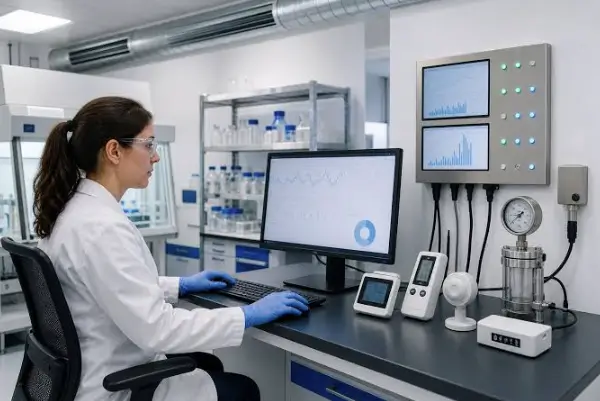
Product reliability depends on more than the quality of individual components. Temperature changes, humidity, and other environmental factors can influence how materials behave, how electronic assemblies function, and how well products maintain their performance over time. For manufacturers and research laboratories, evaluating these effects under controlled conditions is an important step in product development and quality assurance.
Environmental testing allows engineers to reproduce selected conditions in a laboratory and observe how products respond. This process can reveal weaknesses that may not be apparent during ordinary operation, helping teams improve designs before products enter production. For organisations working with small components, prototypes, or limited sample batches, a benchtop testing system can provide a practical way to conduct controlled experiments within an existing workspace.
The Role of Environmental Testing in Product Development
Products encounter a wide range of environmental conditions throughout their life cycle. During transportation, they may experience changing temperatures. In industrial facilities, equipment can operate near heat-producing machinery. Outdoor products may face seasonal temperature variations and moisture exposure, while electronic devices can generate heat internally during operation.

These conditions can affect materials and assemblies in different ways. Plastic housings may expand or contract, seals can change their flexibility, and electrical components may behave differently outside their intended operating range. Repeated exposure can also contribute to stress at joints, coatings, and bonded interfaces.
Environmental testing helps engineers evaluate these risks before a product is released. By using repeatable test procedures, teams can compare materials, investigate failures, and determine whether a design meets defined performance requirements.
Testing is also useful after product modifications. Changes to a housing, circuit board, adhesive, or sealing material may influence environmental performance. Repeating relevant tests helps establish whether the revised product continues to satisfy its specification.
Understanding Benchtop Environmental Testing
A benchtop environmental chamber creates a controlled space for testing products under specified environmental conditions. Depending on the equipment’s design, it may provide temperature control, humidity control, or a combination of capabilities.
The chamber’s function is to maintain the conditions required by a test procedure for a defined period. Sensors and control systems help regulate the environment, while monitoring features can support the recording of test conditions.
Not all chambers offer the same capabilities. Some are intended primarily for temperature testing, while others can control both temperature and relative humidity. Operating range, environmental stability, internal volume, and transition performance can vary considerably between models.
Before selecting equipment, laboratories should identify the specific tests they need to perform. This prevents them from paying for unnecessary capabilities or purchasing a chamber that cannot meet essential testing requirements.
Choosing the Right Chamber for Laboratory Requirements
Equipment selection should begin with a review of sample dimensions, environmental conditions, testing frequency, and available laboratory space. A compact system may be sufficient for small components, but the required operating range and control performance remain critical.
When evaluating a LIB industry benchtop environmental chamber laboratories should compare the equipment specifications with their intended test procedures. The most useful choice is one that meets current requirements while offering suitable flexibility for foreseeable projects.
Several factors should be considered during the selection process.
Temperature Range and Stability
The chamber must be capable of reaching the required minimum and maximum temperatures. It should also maintain the specified conditions consistently throughout the test.
Temperature stability refers to how much the temperature changes over time at a measurement location. Temperature uniformity concerns differences between locations within the usable chamber space. Both characteristics may matter when evaluating sensitive samples.
Humidity Control
If the test requires controlled humidity, the equipment must support the specified relative humidity range under the required temperature conditions. Humidity capability should be verified directly rather than assumed from the chamber’s general environmental classification.
Some tests require temperature control only. In those cases, a simpler system may be more appropriate than equipment with humidity capabilities that will rarely be used.
Internal Working Volume
The chamber should accommodate samples, fixtures, and sensors without overcrowding. Sufficient space allows the intended environmental conditions to reach the sample more consistently.
Laboratories should also consider the size of likely future samples. Selecting a chamber with adequate capacity can reduce the need for replacement if testing requirements expand.
Control and Data Recording
Clear controls help operators set the required conditions and monitor test progress. Depending on the application, useful features may include programmable profiles, alarms, data logging, and the ability to export records for analysis.
The required level of documentation depends on whether the chamber will be used for exploratory research, routine quality checks, or formal product qualification.
Applications Across Different Industries
Electronics and Electrical Components
Electronic assemblies can be sensitive to changes in temperature and humidity. Environmental testing helps engineers examine whether circuit boards, sensors, connectors, and other components continue to operate within their specified limits.
The test may include functional checks before, during, or after exposure, depending on the product and procedure. If a sample fails, the results can guide investigation into thermal stress, moisture sensitivity, or weaknesses in the assembly.
Materials Research
Materials can respond differently to environmental changes. Polymers, elastomers, coatings, adhesives, and composite materials may experience changes in dimensions, flexibility, appearance, or bonding performance.
A controlled chamber allows researchers to expose samples to repeatable conditions and compare their behaviour. Additional mechanical or chemical evaluations may be required to determine the full significance of any observed changes.
Automotive and Transportation Products
Selected automotive components may encounter substantial temperature variations during storage, transportation, and operation. Environmental testing can help assess whether components remain suitable for the specified conditions.
The relevant procedure depends on the component and its qualification requirements. A basic chamber test should not be assumed to replace specialised procedures involving thermal cycling, vibration, humidity, or combined environmental stresses.
Industrial Sensors and Control Systems
Industrial sensors and controllers often need to maintain reliable performance across a defined operating range. Testing can help verify whether readings, electrical characteristics, or control functions remain within acceptable limits.
Where measurement accuracy is important, engineers should compare results with established reference values. Simply observing that a device powers on does not necessarily demonstrate that it continues to measure or operate correctly.
Product Prototyping and Research
During early development, teams may need to compare several prototype designs before committing to mass production. Benchtop environmental testing can help them investigate differences in material selection, enclosure construction, and component arrangement.
Smaller chambers can be particularly convenient when testing individual components or limited sample batches, provided the equipment meets the requirements of the intended procedure.
Preparing Samples and Establishing Test Procedures
Reliable results depend on consistent sample preparation. Before testing, technicians should identify each sample, inspect its condition, and record any existing defects. Baseline measurements may include dimensions, electrical performance, appearance, or other characteristics relevant to the product.
Samples should be arranged according to the test method. Overloading the chamber or positioning samples too close together can interfere with airflow and affect environmental uniformity. Fixtures should hold samples securely without creating unnecessary obstruction.
The test plan should define the required conditions, exposure duration, transition sequence, and acceptance criteria. Where humidity is involved, the specified relationship between temperature and relative humidity must also be considered.
After the test, samples should be evaluated using the predetermined criteria. Depending on the application, this may involve visual inspection, dimensional measurements, electrical checks, or functional testing. Consistent procedures make it easier to compare results across samples and production batches.
Understanding and Using Test Results
Environmental test results provide evidence about how a product behaves under the conditions applied. They should be interpreted in relation to the product’s design requirements rather than treated as a universal statement of durability.
For example, a component that operates correctly after a short exposure may still experience problems during repeated thermal cycles. Similarly, a material that shows no visible damage may have undergone changes in strength or dimensional stability that require further measurement.
When a sample fails, engineers should investigate the likely cause. Possible issues include material incompatibility, insufficient design clearances, weak bonding, inadequate sealing, or components operating beyond their intended range.
Corrective actions can then be introduced and verified through suitable follow-up testing. Documenting each stage creates a useful record of the problem, the engineering response, and the resulting performance.
See also: Taking the Ultimate Leap by Upgrading Your Espresso Machine
Maintaining Environmental Testing Equipment
Regular maintenance helps ensure that the chamber continues to produce dependable conditions. Temperature and humidity sensors may require calibration, while door seals, water systems, and other components should be inspected according to the manufacturer’s instructions.
Operators should record servicing, calibration, and any unusual behaviour. If the chamber struggles to maintain its settings or shows unexpected fluctuations, the problem should be investigated before its results are used for important product decisions.
Proper loading, avoiding unnecessary door openings, and keeping the chamber clean can also support stable operation. For laboratories conducting formal qualification work, records of equipment status and test settings improve traceability.
Frequently Asked Questions
1. What is a benchtop environmental chamber used for?
It is used to expose samples to controlled environmental conditions, such as specified temperatures and, where supported, humidity levels. It helps researchers and manufacturers assess product performance, material behaviour, and compliance with defined requirements.
2. How do I determine the right chamber size?
Consider the dimensions of the samples, fixtures, and sensors, along with the need for suitable airflow and environmental uniformity. It is also sensible to account for foreseeable future testing requirements.
3. Does every environmental chamber control humidity?
No. Capabilities vary by model. Some chambers provide temperature control only, while others support both temperature and humidity regulation. Buyers should confirm the required operating ranges in the equipment specifications.
Conclusion
Benchtop environmental testing provides manufacturers and laboratories with a controlled way to evaluate product behaviour under defined conditions. It can support design development, material research, quality assurance, and failure investigation across a variety of industries.
Selecting appropriate equipment requires careful consideration of temperature and humidity capabilities, internal capacity, control performance, and documentation needs. With consistent sample preparation, suitable test procedures, and routine equipment maintenance, laboratories can obtain more dependable results and use those findings to improve product quality and reliability.